
Monero Bridge: How to Move XMR Across Chains
Complete guide to Monero bridges and cross-chain XMR transfers. Learn how to bridge Monero to Ethereum, Solana, and other chains securely.
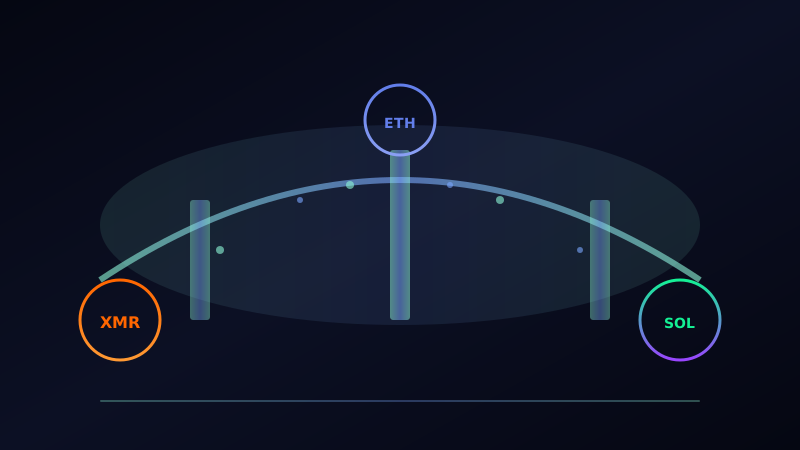
Monero's privacy is legendary. But there's a catch: XMR lives on its own island. You can't just plug it into Ethereum DeFi or use it on Solana DEXs.
That's where Monero bridges come in. They're the tunnels connecting Monero to the broader crypto ecosystem.
What Is a Monero Bridge?
A Monero bridge is a mechanism that allows you to:
- Move XMR value to other blockchains (as wrapped tokens)
- Access DeFi with your Monero holdings
- Trade XMR on DEXs that don't natively support it
Think of it like converting your cash to casino chips. The value transfers, but the form changes.
The Monero Bridge Challenge
Here's why bridging Monero is uniquely difficult:
Privacy vs. Transparency
Most bridges require proof of deposits. But Monero's stealth addresses and hidden amounts make this challenging. You can't easily prove "I deposited 5 XMR" when the amount and destination are hidden by design.
No Smart Contracts
Monero doesn't support the complex smart contracts that typical bridges use. This limits bridging options to:
- Centralized custodians (trust-based)
- Atomic swaps (limited pairs)
- Specialized protocols
Current Monero Bridge Options
Option 1: Direct Swaps (Recommended)
Instead of traditional bridges, swap services let you exchange XMR for native tokens on other chains.
How it works:
- Send XMR to the swap service
- Receive ETH/SOL/BTC directly on your target chain
- No wrapped tokens, no bridge risks
GhostSwap excels here, offering XMR pairs with major chains.
Option 2: Secret Monero Bridge
The Secret Network has experimented with private bridges:
- Converts XMR to sXMR (Secret Monero)
- Maintains some privacy properties
- Enables Secret Network DeFi
Status: Experimental, limited liquidity.
Option 3: Wrapped Monero (wXMR)
Some platforms offer wrapped Monero on Ethereum:
- 1:1 backed by real XMR
- Requires trusting the custodian
- Enables Ethereum DeFi
Caution
Wrapping removes Monero's privacy benefits. Your wXMR transactions are fully visible on Ethereum.
Option 4: Haven Protocol (xUSD)
Haven Protocol offers on-chain conversion of XMR to private stablecoins (xUSD, xBTC, xGold variants) with privacy-preserving conversions.
Consideration: Haven has had some technical challenges. DYOR.
Bridge to Monero: Getting XMR from Other Chains
Want to move into Monero? This is actually easier:
ETH → XMR
- Use GhostSwap or similar service
- Connect your Ethereum wallet
- Swap ETH for XMR
- Receive in your Monero wallet
Time: 10-30 minutes | Fees: Typically 1-2% + ETH gas
BTC → XMR
The most popular bridge pair:
- Atomic swaps available
- Multiple swap services support it
- Generally good liquidity
See our BTC to XMR guide for details.
SOL → XMR
- Swap SOL for intermediate asset (USDC)
- Convert USDC to XMR
- Or use services with direct SOL-XMR pairs
Note: Direct SOL-XMR liquidity is growing but still limited.
Privacy Considerations When Bridging Monero
The Bridging Paradox
When you bridge XMR out:
- The source (Monero side) remains private
- The destination (other chain) becomes transparent
When you bridge into XMR:
- The source is transparent
- The destination becomes private
Best Practices
For maximum privacy:
- Chain hop - Don't go directly from KYC source to Monero
- Wait periods - Let funds "rest" between movements
- Vary amounts - Avoid obvious patterns
- Use multiple routes - Don't always use the same bridge
For practical use:
- Understand the tradeoffs - Bridging often reduces privacy
- Only bridge what you need - Keep core holdings as native XMR
- Consider the return path - How will you convert back?
Comparison: Monero Bridge Methods
| Method | Privacy | Speed | Trust | Best For |
|---|---|---|---|---|
| Direct Swap | High (XMR side) | 10-60 min | Medium | Most users |
| Atomic Swap | Very High | 30-120 min | None | Privacy maximalists |
| Wrapped XMR | Low | Fast | High | DeFi access |
| Secret Bridge | Medium | Variable | Medium | Secret Network |
Common Bridging Mistakes
Mistake 1: Using KYC Bridges
Some services offer KYC-optional bridging but collect data anyway. For privacy, stick to truly no-KYC options.
Mistake 2: Ignoring Fees
Bridge fees can be substantial:
- Trading fees: 1-3%
- Network fees (especially Ethereum): $5-50+
- Slippage on large amounts
Always calculate total cost before bridging.
Mistake 3: Insufficient Confirmations
Don't panic if your XMR doesn't appear instantly. Monero requires:
- 10 confirmations before spending
- Each block: ~2 minutes
- Total wait: ~20 minutes after receipt
Mistake 4: Wrong Address Format
Monero addresses:
- Standard: Start with
4, ~95 characters - Subaddress: Start with
8, ~95 characters - Integrated: Start with
4, ~106 characters
Double-check before sending!
Future of Monero Bridges
The landscape is evolving:
Atomic Swaps Maturing
Projects are making BTC-XMR atomic swaps more accessible. Soon, trustless swaps might become the default.
New Privacy Bridges
Secret Network and similar projects are working on privacy-preserving bridges that maintain anonymity across chains.
Regulatory Pressure
As regulations tighten, some bridges may add KYC. The decentralized options become more valuable.
Conclusion: Bridge Wisely
Monero bridges are powerful tools but come with tradeoffs. The key insights:
- Direct swaps are usually better than wrapped tokens
- Privacy degrades when leaving the Monero chain
- No-KYC services preserve more privacy
- GhostSwap offers reliable XMR bridging with minimal trust
Need to move value into or out of Monero? Do it smart. Use services that respect your privacy and understand the implications.
Ready to bridge? Start swapping on GhostSwap for secure Monero bridges.